HANGER or Homepage
104 Lindsey Drive
Nicholasville, Kentucky 40356
606-885-1244
HANGER or Homepage
104 Lindsey Drive
Nicholasville, Kentucky 40356
606-885-1244
|
PRICES |
|
|
|
|
|
|
|
|
|
|
The Begionings of Flight Simulation
Modern flight depends heavily upon the use of flight simulation. Flight simulators today reproduce the realm of flight and the characteristics of today's airplanes in a most realistic way. Simulators have advanced to the point where they helped make travel to the Moon, if not entirely uneventful, at least a pre-planned scenario.
How, when, and where did this activity of flight simulation begin? In the Aviation Museum of Kentucky you will find one of the early examples of flight simulation.
Edwin Albert Link, born in Huntington, Indiana, a pilot from the mid-twenties was the son of a piano and organ manufacturing company owner near Binghamton, New York. Because flight training was so expensive, he wanted to devise a way to do as much training on the ground as possible. He also knew the airplane to be a terrible place to learn anything. It was noisy, bumpy at times, and very confining.
Because of his interest in saving time, and money, and wanting to better the French "Penguin System" of learning by airplane-operation-only-on-the-ground, in 1929, he invented what he called, "The Pilot Maker." The pilot maker was invented primarily due to Mr. Link's expertise in the use of piano and organ manufacturing. He utilized his skills, as well as many parts from such manufacturing work to develop his first useful model; the one eventually called by many, "The Blue Box."
The first "Blue Box" was, in the main, constructed of a series of bellows and motors and a universal joint beneath the box which caused it to react with the proper movements due to the operation of the control stick and rudder bar. A semblance of flight was the result.
Most early Link Aviation Trainers went to amusement parks, and few to flight operations. In 1930, the Pioneer Instrument Company of Brooklyn, New York installed a turn and bank indicator, a magnetic compass, and an airspeed indicator. Pioneer was able to show the need for these instruments in order to prevent vertigo. Amusement park trainers had no instruments. The US Navy purchased the third trainer in which instruments were installed. Although acceptance was slow at first, eventually the Army Air Corp's purchase of six trainers in 1934 marked, and guaranteed the birth of the flight simulation industry. Much money and many lives have been saved as a result. The model "A" Link Trainer was soon sold to Japan, and the USSR, and other countries as well. With the rumblings of war, soon trainers began to appear in such places as England, France and other nations that would one day be combatants.
During World War II, due to this extended use, the Link Trainer was used to train over half a million pilots.
Beginning with the model "A," and evolving slowly, by the time the Link incorporated the "Automatic Responding Crab Pen," such as the one displayed in the Aviation Museum of Kentucky, in Lexington, the trainer was dubbed the "E," special. The evolution in flight simulation has continued and the end is not in sight.
Now, with the arrival of the newest pilot maker, the flight simulation program "FLY!," and the thoroughly tested and tried AeroMachines Aero 700, 600, and 500 Line of Personal Computers you can continue to proof and define the concept established and begun by the pioneers of aviation as far back as 1929.
Let AeroMachines and FLY!, and the concentrated efforts of our dedicated employees bring you into the world of aviation and modern flight simulation
|
|
|
|
|
|
|
|
|
|
|
|
AeroMachines Super
Athlon Flight Training Computers: where Gaming is secondary.Custom built to run:
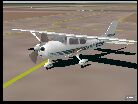
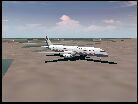
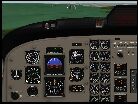
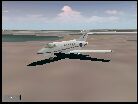
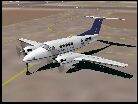
Fly! flight simulation at its best.Not a toy. Not just for games. AeroMachines equipped with the FLY! flight simulation program, and AeroMachines supplied shareware, freeware, and tutorial add-ons can be a valuable addition for your flight department, or for your own individual proficiency training.
Note: Be sure to read the evaluation reports we have prepared for you on the January '2000 King Air accident and how this program might prevent such accidents in future.
 AeroMachines use AMD Athlon 600, 650, 700 and 800 processors.
AeroMachines pre-loads, FLY!, the best flight simulation for personal computers.
AeroMachines pre-loads a great selection of Shareware and Freeware for FLY!
AeroMachkines is loaded with Tutorials on how to fly the USAF Flight Screening Program as flown in the T-41. AeroMachines uses the Cessna 172 for this training at present.
Note: The United States Air Force now uses the Slingsby T-3A Firefly. The course is still flown at Hondo, Texas.
Note: These AMD Super Athlon Personal Computers will run thousands of Windows 95 and 98 programs. Install OS/2 if you like. Run other operating systems such as Linux and Windows 3.1. But keep in mind that this machine is built first to be the best flying machine around. It is built to tun FLY,
AeroMachines: A great personal compute, the right flight simulation program, and the best shareware and freeware to make your flying, or your flight training on the personal computer the kind of experience you believe is worthy of yoAeroMachines: A great porsonal computer, the right flight simulation program, and the best collection of your efforts!


 How do you put it all together the first time? And how do you do it right?
AeroMachines knows it is possible to make it work--right out of the box!
Many users, new to FLY! and the PC, have found it to be a daunting task.
Let AeroMachines do the hard part: Let Us Build Your FLY! PC.
AeroMachines will do the work, and you have all the fun--right out of the box.
|
|
|
|
|
|
|
|
|
|
|
|
|
|
|
|
|
FLY! is the registered trademark of Terminal Reality and The Gathering of Developers. All other trademarks are the
Respective property of their registered owners.