
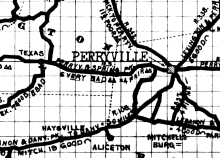
 The next day I traveled hardly more than half as far, but had a much more
wearisome time of it, on account of bad weather and inferior roads. The
Blue-Grass Region was now all behind me as I left Harrodsburg, at a quarter
before 10 o’clock, the appearance of the country was less attractive
than on the day before, irrespective of the gloom produced by the
threatening clouds, which soon brought a gentle shower of rain, wherefrom I
took shelter in a roadside shed. A little later, I was overtaken by a still
heavier shower, and could find no better protection than a big tree. The
rain did not last long enough to greatly injure the limestone pike,
however, and in 2 h. I had covered the 12 m. which brought me to the end of
it at the little tavern in
Perryville,
in whose wooden walls are still embedded some of the cannon-shot fired in
the battle of that name. This was fought on the 8th of October, 1862,
between the armies of Buell and Bragg, numbering perhaps 60,000 men
altogether; and in no other conflict of the civil war was the proportion of
killed and wounded greater than this. The official report of Major-General
McCook, the commander of the First Corps of Buell’s army, called it
“the bloodiest battle of modern times for the number of troops
engaged on our side”; while General Bragg reported to the Richmond
authorities, with equal literary awkwardness, “For the time engaged
it was the severest and most desperately contested engagement within my
knowledge.”
The next day I traveled hardly more than half as far, but had a much more
wearisome time of it, on account of bad weather and inferior roads. The
Blue-Grass Region was now all behind me as I left Harrodsburg, at a quarter
before 10 o’clock, the appearance of the country was less attractive
than on the day before, irrespective of the gloom produced by the
threatening clouds, which soon brought a gentle shower of rain, wherefrom I
took shelter in a roadside shed. A little later, I was overtaken by a still
heavier shower, and could find no better protection than a big tree. The
rain did not last long enough to greatly injure the limestone pike,
however, and in 2 h. I had covered the 12 m. which brought me to the end of
it at the little tavern in
Perryville,
in whose wooden walls are still embedded some of the cannon-shot fired in
the battle of that name. This was fought on the 8th of October, 1862,
between the armies of Buell and Bragg, numbering perhaps 60,000 men
altogether; and in no other conflict of the civil war was the proportion of
killed and wounded greater than this. The official report of Major-General
McCook, the commander of the First Corps of Buell’s army, called it
“the bloodiest battle of modern times for the number of troops
engaged on our side”; while General Bragg reported to the Richmond
authorities, with equal literary awkwardness, “For the time engaged
it was the severest and most desperately contested engagement within my
knowledge.”
I took dinner at the little tavern, and was told that I had already crossed over Crawford’s Cave, from which issues a stream of very clear water, that has never been known to fail, even in the extremest seasons, when all the other springs have dried up. According to local tradition, it was the desire to control this particular spring which caused the two armies to try conclusions with one another here, though most of the fighting was done on Chaplin Hills, 1 m. or more away... I therefore wheeled backward my course, in order to visit the cave and take a drink of these historic waters. I might have done this more conveniently in the forenoon, soon after passing the toll-gate and the post which said “2 m. to Perryville,” if only I had been advised to turn down the path to the r., just beyond the red brick house.